If I had a dime for every time a bill collector from a collection agency threatened someone in debt with a lawsuit and actually followed through on it, I would probably be an extremely poor man. It's rare for a collection agency to sue people but it is more common for the bill collector to threaten legal action.
However, you should be aware that when you borrow money as a loan or on a credit card you are in an agreement. Creditors use carefully worded contracts so they do not lose their money if you default in your payments. Understand that anytime you are in breach of a contractual arrangement, you are exposing yourself to a lawsuit.
It's because of this fact that bill collectors use their seemingly endless supply of one liner's that end with threats of "legal action".
Below are some reasons why the threat is rarely followed by action:
Suing someone takes time, financial & human resources.
Despite that bill collector going on about being in debt and suing you for being a bad person, it's rarely an emotional decision to sue and more of a business one. Throwing good money after bad in hopes a lawsuit will collect a debt is a colossal waste, if you know you can never do anything with a judgement once you get it.
Supporting documents are required for a lawsuit.
There are situations where actual proof that the debtor owes the debt is somehow unavailable. A judge needs to hang his hat on something when issuing a judgment to a creditor against a debtor, and they want to see proof the debt is owed.
The statute of limitations.
This is a law in place that defines the period within which legal action may be taken. This time frame varies depending on your laws so you would need to check with a licensed professional in your area.
It's far more cost effective for a collection agency to threaten legal action rather then actually spend the human resources, time and money at actually doing it. That's why practically everyone dealing with bill collectors is threatened with a lawsuit at some point in the collection cycle. Collection agencies are masters of empty threats.
Now, don't rest too easy, there are situations where the threat of a lawsuit may be very real. You have to be alert to two points in the collection cycle. The original creditor and the debt buyers.
The collection cycle usually follows this order: Original Creditor --> Collection Agency --> Debt Buyers.
Some original creditors can be litigious. What that means is they are inclined to sue you if they know you have the means to pay the debt and/or you own a home with equity. They may decide to hire a law firm to sue you to secure the debt with a judgement rather then assigning the debt to a collection agency to harass you.
The collection agency is usually (but not always, some creditors skip this step) the second step. The agency is a paid a commission usually ranging from 10-25% of what is collected for the original creditor.
The debt buyers are often the last collection step. It's usually some form of a collection agency that buys debt for a few pennies on the dollar. Because the debt buyer owns the debt, they can do what ever they want with it. I have seen some debt buyers just blindly sue people when there are no assets to satisfy a judgement. It's a really bad business decision but it does happen sometimes. Others won't even spend the time or money, it depends on company policy.
A debt assigned to a collection agency on the other hand is a different story. I would estimate that your chances of actually being sued by a collection agency that has been assigned a debt for collection, is about as good as being struck by a bolt of lightening on relatively clear day. However, it is also fair to say that if you are behind in your payments and owe debt then your chance of being threatened with a lawsuit by bill collectors is nearly as certain as death and taxes.
Debt is tough to deal with; there is no easy way out of it. Seek help if you need it, debt settlement is one of the best alternatives for people dealing with collection agencies because it is fast, effective and has little to no further impact on your credit rating.
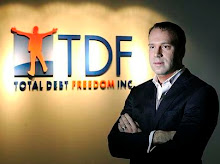
Richard Cooper is Founder & CEO at Total Debt Freedom Inc. Canada's most respected debt settlement company. Total Debt Freedom offers debt settlement plans that can save you 40-70% of what you owe and get you debt free in 1 - 3 years. http://www.totaldebtfreedom.ca/
Showing posts with label debt help. Show all posts
Showing posts with label debt help. Show all posts
Tuesday, January 6, 2009


Wednesday, May 14, 2008
How to Stop Collection Calls
Harassing collection calls when you owe debt can be a nightmare. People tell me all the time how relentlessly the phone can ring when they owe money. There is a way to minimize this and actually stop it in most cases.
Adopting these techniques is also effective in stopping the horrible telemarketers that call you every evening offering windows, doors, lawn care and the like.
The first thing you must understand is most collection agencies, telemarketers and banks have adopted predictive dialing systems for making outbound calls. They are highly effective because each agent doesn't have to manually dial a number each time they call out. Instead they will hire 300 collectors for every 1,000 lines that are dialed out. The computer actually dials more numbers then agents available to take the calls. This minimizes time spent dialing numbers and getting disconnected numbers or no answers.
The way it works is when the computerized dialer recognizes a human voice on the receiving end of the call, it immediately connects the call to the first available bill collector. Sometimes there is a delay in the connection because the collectors are busy wrapping up another call, which is why you can sometimes end up saying "hello" several times before you talk to a human.
Your first step you should take is ordering a call privacy feature from your phone company. This feature essentially prompts the inbound caller with a message like "the person you are trying to reach does not accept calls from unknown or private numbers, please state your name before we attempt to connect you". The computer isn't able to state a name so the call drops and the call is not connected. Your phone doesn't even ring.
This feature is offered by almost every phone company and goes by names like: call privacy, anonymous caller ID or anonymous caller rejection. I have looked at several phone providers' websites and the price seems to range from $2/m to $5/m.
The other preventative step you should take is a telezapper. I have tested this myself and they work well. This is a device you attach to your phone. Essentially when you or your answering machine pick up it detects a predictive dialer calling and it plays a tone that tricks the dialer into believing your telephone number is disconnected. The predictive dialer removes the number from its calling list to limit wasting its calling resources at a later date. It is a very effective tool for $39.99 on the telezapper website; I got mine off eBay for $15.
Since the majority of the debt collection calls you will receive are made by a predictive dialer, you will stop collectors and even telemarketers in their tracks. I am not advocating hiding from your payment obligations to your creditors, but adopting these tips will let you fight back and at least give you an opportunity to minimize the collection harassment while you work out a debt elimination strategy.
If you need help getting out of debt, take 15 minutes and get a free consultation from our debt settlement specialists by calling (866) 833-1992 or fill out the form on our website at http://www.totaldebtfreedom.ca to learn more about debt settlement.
Monday, March 24, 2008
Legal Action - The Truth Exposed
The people I talk to are always concerned about a lawsuit, I should state first that I am not a lawyer and this article is not legal advice and should not be used as a substitute for the advice provided by a licensed expert. This article is for informational purposes only and based solely on my 14 years of debt management experience.
Anytime you borrow money as a loan or in the form of a credit card you are entering into an agreement. Creditors use high priced lawyers to draft carefully worded agreements so they do not lose their money. You need to understand that ANYTIME you are in breach of a contractual arrangement you are exposing yourself to a lawsuit.
The fact of the matter is there are hundreds of thousands to literally millions of contacts broken for not paying debt daily in North America. The creditors simply do not have the resources or the capacity to sue every person that does not pay.
But they can certainly threaten a lawsuit to everyone that does not pay. Typically a very tiny percent of people ever get sued for not paying their debts, most just get harassed by bill collectors and get nasty collection letters that typically are not worth the paper they are written on.
Launching a lawsuit to collect a debt is generally a business decision and not a personal one. A creditor must incur more debt in the form of legal fees and court costs to even begin the process, not to mention the time needed to gather the evidence and put it all together. In making this decision a creditor will weigh out if it is worth their while to throw more good money after bad trying to collect debt with a lawsuit or just letting collection agencies irritate you hoping to be paid at some point later.
They are not concerned with if they will win or not. If you borrowed the money and did not pay, they will win.
What creditors are concerned with is whether or not they can collect on the judgment once they win. A judgment allows the creditor to take the money from you without asking. It can be in the form of a lien on your home, bank account or garnishment on your wages. But if they have no idea where to collect on a judgment it's a pretty bad business decision to sue someone with nothing.
The 4 main things to consider when launching a lawsuit is:
Can they find you?
This may seem obvious and silly but if they don't know where you are, it's a mistake to waste time and money getting a judgment they can never collect on.
How much is owed?
Generally speaking anything less then $1,000 is a colossal waste of time; they will usually pass on suing these balances. Debts under $10,000 fall under the small claims courts laws in Ontario (check your region) and are fairly easy to sue, they don't consume vast resources. In fact I have seen creditors limit their claim to $10,000 when slightly more is owed so they can take advantage of the small claims court rules. If you owe $10,000 or more it will take much more in the way of resources to obtain a judgment so only those people with sufficient and clear assets to pay a judgment are usually ever considered. But if you do have to answer a lawsuit for $10,000 or more you are liable for a lot more court costs and legal fees incurred.
What assets do you own?
If you are a homeowner with any equity you are a primary target for a lawsuit if you aren't paying your debts, you can't pick up a home and move it. It's great security for a judgment. You can't do any financing or sell it with a lien on the title so it is almost 100% guaranteed to be paid. Cars, boats, household goods, furniture or any other goods that can be moved and hidden are almost never targeted to satisfy a judgment. Another problem with these items is they generally depreciate and are worth next to nothing after factoring the cost to collect and sell them.
Do they know where you work?
Employment income can be garnished. There is no fixed amount of your pay, it's up to the courts to decide but usually less then 20% of your pay is common. The problem here is the creditor must first know where you work, and further to that if you quit your job they are left with nothing unless they can find out where you end up next. Finding out where someone works can be next to impossible sometimes however it can be done. They will also consider the type of job you have, more secure, higher paying, longer running jobs are more attractive to garnish then short term lower paying jobs.
If you are having difficulty in paying your bills and are afraid of a lawsuit, it's probably a good idea to limit your communication until you have sufficient resources available to pay the debts. Bill collectors are very good at probing and getting information from you that can be used later on for a lawsuit. Talking about your job, your home or other assets can only increase your chance of getting sued.
If you owe debt, deal with it. After food, shelter and your basic life needs, paying debt should be your next priority. Sitting on debt longer only costs more, closes doors and limits your options in life. Do it on your own, but if you find the balances keep going north and haven't come down then seek help now. Bankruptcy and Debt Settlement are great options if you owe more then $10,000. Anything less then that is a good candidate for credit counseling. But the bottom line is don't contemplate doing something about it, eliminate it.
Richard Cooper is Founder & CEO at Total Debt Freedom Inc. Canada's most respected debt settlement company. Total Debt Freedom offers debt settlement plans that can save you 50-70% of what you owe and get you debt free in 1 - 3 years. http://www.totaldebtfreedom.ca
Tuesday, March 18, 2008
Credit Card Offers - Using Promotional Offers To Pay Off Debt
Beware of the special and introductory offers at ridiculously low interest rates. It's generally a bad idea to use credit cards to consolidate debt. I get bombarded with offers of anywhere from 1.99% - 4.99% credit cards all the time.
With 5 year mortgage rates hovering in the 5.99% range today for people with perfect credit how can credit card companies afford to offer a 1.99% rate on an unsecured credit card? They can but only in the short term to get your business.
I read the fine print on the back and the promotional rate only lasts for 9 months after which it goes up to the non-promotional interest rate of 19.99%. One offer didn't even tell me what the non-promotional rate was on the mailed offer; I had to look it up on their website to find out. In many cases promotional interest rates are based only on balance transfers; what that means is you only get the lower interest rate if you move other credit card balances to the new card being offered.
Be careful and do your homework, we have seen many people lured by special offers only to find when the promotional period ends so do their chances of paying off the debt.
People can get into trouble if they don't read the fine print and see what they are signing up for; when things appear to be too good to be true they usually are.
For credit cards follow these simple rules of thumb and (1) never charge anything to a credit card you cannot afford to pay off in full when you get the bill. (2) Credit cards and promotional offers should never be used to finance a lifestyle you cannot afford. (3) Live within your means and save money every month, rainy days do come and sometimes when it rains it pours so it's a good idea to have 3 months salary in the bank.
If you are drowning in debt, pay it off. If you can't and need help then look for the assistance of a reputable debt settlement company that will take the time to provide a free assessment on your situation.
Richard Cooper is Founder & CEO for Total Debt Freedom Inc. Canada's most respected debt settlement company. Originally conceived for the mortgage community in 2003 to help fund more sub-prime mortgages and fix turn downs due to bad credit; Total Debt Freedom also offers debt settlement plans up to 36 months for those that aren't homeowners. http://www.totaldebtfreedom.ca
Filing Bankruptcy in Canada - Shocking Facts Most People Don't Know About
Bankruptcy can sometimes be your best way out of an overwhelming debt situation but you should consider how the law forces a Trustee in Bankruptcy to operate in Canada.
The bankruptcy process must be administered by a Trustee in Bankruptcy. Most Trustee's have both an accounting designation and a university degree. They must also pass a bankruptcy and law course. When considering filing for bankruptcy, always deal with a licensed trustee; that is, a trustee who has obtained a license from the Superintendent in Bankruptcy pursuant to the Bankruptcy and Insolvency Act (Canada).
What most people don't know is that even though you pay a Trustee for filing an assignment in bankruptcy, they are working on behalf of the creditors that you owe. That means even though you pay the Trustee to provide a fresh start for you, they are essentially an appointed agent for the creditors and looking after the best interest of the people that you owe. The Trustee works towards returning the creditors money back through the assets you hand over during the bankruptcy process.
You will present all of your debts and most of your assets to the Trustee. Very little of your assets are exempt from bankruptcy. In Ontario for example, you may keep your car if it is worth less than $5,650, necessary and ordinary wearing apparel up to $5,650, certain tools up to $11,300 if required by your trade, up to $11,300 of furnishings and certain types of life insurance. Most of your other assets are available for seizure and may be lost including your home, and your investments (except RRSP's and pension plans in certain cases). As a result, always consider doing everything you possibly can do to avoid going bankrupt.
If you owe more then $10,000 and your debts have been listed to a collection agency, consider debt settlement as an option. A debt settlement company can help avoid bankruptcy and works towards stopping collection calls by acting as your agent and negotiating a settlement with your creditors. It is an excellent way for you to wipe out your debt fast while saving you a substantial amount of money. In most cases you pay back about half of what you originally owed the creditors and that should include the fees. I have seen people achieve total debt freedom in as little as 30 days if they have access to a lump sum of money; anyone who is a homeowner or has family willing to help should definitely consider this option. Others may take 24-36 months to settle their debt. Unlike a Trustee a debt settlement company is acting for you only; in most cases fees charged are based on the money you save. That means that they will work to save you as much as possible. See http://totaldebtfreedom.ca/ for more information on debt settlement in Canada.
Always look at all of your options when considering bankruptcy. Generally speaking, if you suffer from financial hardship, have very limited income and most of your assets qualify as being exempt from bankruptcy seizure, then it's a good idea for you to get a free consultation from a Trustee about going bankrupt.
Don't be afraid of dealing with your debt. Sometimes bad things do happen to good people or maybe you just made some bad choices in life. We are only human. The worst mistake you can make is putting it off. Either way if you choose debt settlement or bankruptcy, start your path to debt freedom as soon as you can and get on with living life totally debt free.
Richard Cooper is Founder & CEO for Total Debt Freedom Inc. Canada's most respected debt settlement company. Originally conceived for the mortgage community in 2003 to help fund more sub-prime mortgages and fix turn downs due to bad credit; Total Debt Freedom also offers debt settlement plans up to 36 months for those that aren't homeowners. http://www.totaldebtfreedom.ca
Tuesday, March 4, 2008
Get out of Debt - The Secret
In order to get out of your debt, you must apply the secrets of debt freedom. These tips are the foundation of becoming debt free and creating options in your life.
There is an old saying that talks about stupidity. It goes something like "the definition of stupidity is doing the same thing over and over again, expecting a different result". For example, people don't keep turning on a cold water tap expecting hot water to pour out. So why would you keep doing the same thing with your debt? If it isn't going away you need to do something differently.
Ignoring the debt isn't going to make it go away. Blaming others for your mistakes is of no help, but hoping something will change is even worse.
You have to effect change in your life and not wait for it to happen. At the end of the day you have to want to get out of debt to make that change to your financial situation.
As a little 8 year old I can remember that burning desire for a bicycle one summer, my parents were poor so I had to figure out a way to get it on my own. I must have shoveled 50 driveways that winter in the freezing cold (and it snowed heavy that winter) at $5 a driveway to make the money. But I did it because I had the image of that bicycle burned into my minds eye.
I don't care if you owe $75,000, if you want out of debt bad enough, sit yourself down and figure out a way. Don't blame anyone else for your problems; take a good hard look in the mirror. The person looking back at you got you into debt, and believe it or not can actually get you out of it.
During my career I have seen winners and losers deal with all types of debt. I can tell you without a doubt the reason why people get out of debt is because they don't blame others, are serious about it, and do something to fix it. The main reason the losers are stuck with their debt is because they aren't serious about resolving it.
Brian Tracy, a motivational speaker, once stated that "you only have options if you can save money. If you are in debt, you have no options." What he means is you cannot quit your job, open a business, treat yourself to a luxury or even take a vacation. Being in debt severely limits your options in life. Once you find your reason for becoming debt free and plan it out, nothing can stop you.
There are a lot of great articles on getting debt help, some can do it all on their own and others may need help. Bankruptcy, Debt Settlement, and Credit Counseling are all viable plans. I personally believe (and have proven) that debt settlement does the least amount of damage to your credit and is the fastest and most cost effective way to debt freedom. Do your homework and start doing something about it.
Richard G. Cooper is Founder & CEO at Total Debt Freedom Inc. Canada's most respected debt settlement company. Total Debt Freedom offers debt settlement plans that can save you 50-70% of what you owe and get you debt free in 1 - 3 years. http://www.totaldebtfreedom.ca/
Thursday, February 28, 2008
Do-It-Yourself (DIY) Debt Settlement
Do it yourself debt settlement can save you a lot of money, many people live by the "if you want it done right, you've got to do it yourself" camp.
The thing to remember is you can do almost anything yourself if you have the right training, resources and time to do it. But realistically most people would rely on an auto mechanic to replace their transmission for them or hire a lawyer if they wanted to finalize a divorce correctly. The same is true if you want your debt settled correctly. Unless you really know what you are doing you should really leave it to the professionals. This is especially true when it comes to your money and credit rating.
There are many ways I have seen bill collectors try to take advantage of people that don't understand how to finalize a settlement; the most common problem I see is when the difference remains owed even after they thought it was settled in full. Bill collectors can rarely be trusted. We have heard from countless people that tried to settle the debt themselves only to find out they were duped by the bill collector and the balance of the debt has been sold to another collection agency.
If you are adamant about doing it yourself, first make sure you can budget a lot of your time (at least 25 hours) to deal with each creditor you owe and secondly do your homework and learn your stuff. There are lots of DIY guides out there but check out the author and make sure they have the knowledge. Also make sure you are committed to finishing the job as many debt settlement companies wont take over if you find you have bitten off more then you can chew. DIY debt settlement is a mess professional debt settlement companies do not want to clean up.
At the end of the day it may appear to cost more money to hire a professional company to negotiate settlements. However, when you consider the amount of resources and time that is needed to get it done right, it usually is more cost effective to pay a company to do it for you.
Look for a debt settlement company that compensates its team based on results and offers you a service guarantee. No settlement should equal no fee. Avoid places that promote themselves as jacks of all trades, where they offer debt settlement, bankruptcy, credit counseling and debt consolidation loans all at the same place. Find a boutique shop that focuses their business on debt settlement and knows what they are doing. If you are not sure, ask questions.
Richard Cooper is Founder & CEO for Total Debt Freedom Inc. Canada's most respected debt settlement company. Originally conceived for the mortgage community in 2003 to help fund more sub-prime mortgages and fix turn downs due to bad credit; Total Debt Freedom also offers debt settlement plans up to 36 months for those that aren't homeowners. http://www.totaldebtfreedom.ca
Subscribe to:
Posts (Atom)